Why this approach?
Preserving kidney tissue
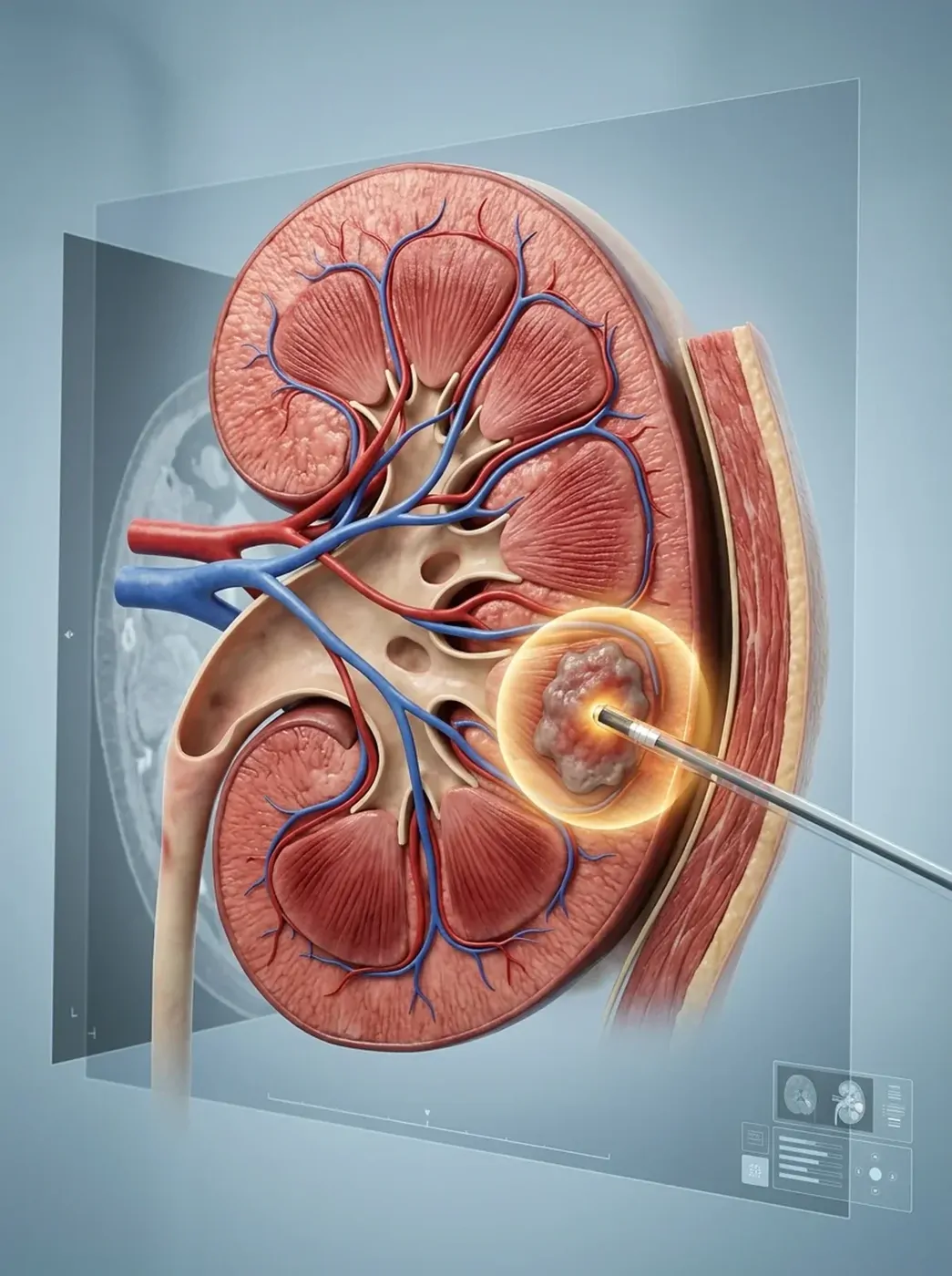
In small, localised tumours, ablation can preserve healthy tissue instead of removing the whole kidney.
No large incision
Access through the skin with a needle or through an artery; a shorter recovery than open surgery.
An option for high-risk patients
Older patients or those with serious heart or lung disease are sometimes candidates for ablation or embolization.
Procedure steps
-
1
Diagnosis and staging
CT/MRI and, if needed, a biopsy; review by a tumour board or with urology and interventional radiology.
-
2
The procedure
Percutaneous radiofrequency or microwave ablation, or trans-arterial embolization, depending on tumour type and size.
-
3
Imaging follow-up
CT/MRI at set intervals to assess the response and check for recurrence.
Hearing the words "kidney tumour" is frightening. Removing the kidney (nephrectomy) was the standard for years, but today, for small tumours and high-risk patients, minimally invasive methods such as ablation and embolization are serious options.
What is minimally invasive kidney tumour treatment?
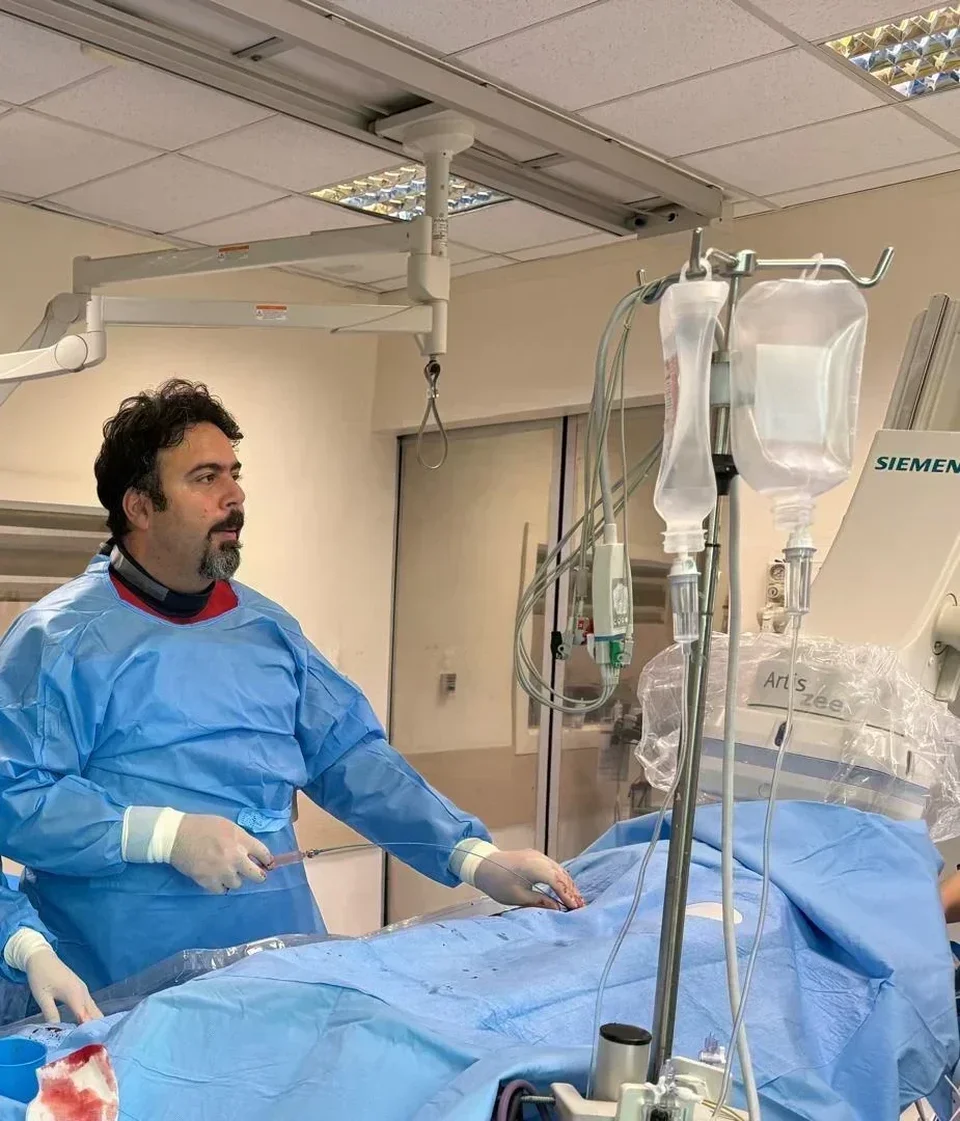
In percutaneous ablation, a needle is inserted through the skin and the tumour is destroyed with heat (radiofrequency) or microwave energy. In embolization, the arteries feeding the tumour are blocked. Both are performed under CT or angiographic guidance and do not replace every surgery.
Who is it suitable for?
- Small renal cell carcinoma (about 3–4 cm or less) in older or high-surgical-risk patients
- A tumour in a single kidney or in a kidney with poor function
- Patients for whom partial nephrectomy is difficult
- Some metastatic cases, to control symptoms
Benefits and limitations
Better preservation of kidney function, a shorter recovery and no need for heavy general anaesthesia are advantages. Recurrence and the need to repeat treatment are possible in some cases, so regular follow-up is essential.
Frequently asked questions
Can all kidney tumours be treated without surgery?
What is ablation?
Does ablation preserve kidney function?
Is a biopsy needed before ablation?
What follow-up is needed after treatment?
This page is for general education. The right treatment is chosen only after an examination and a review of your images and medical records.