Why this approach?
Reopening the blocked artery
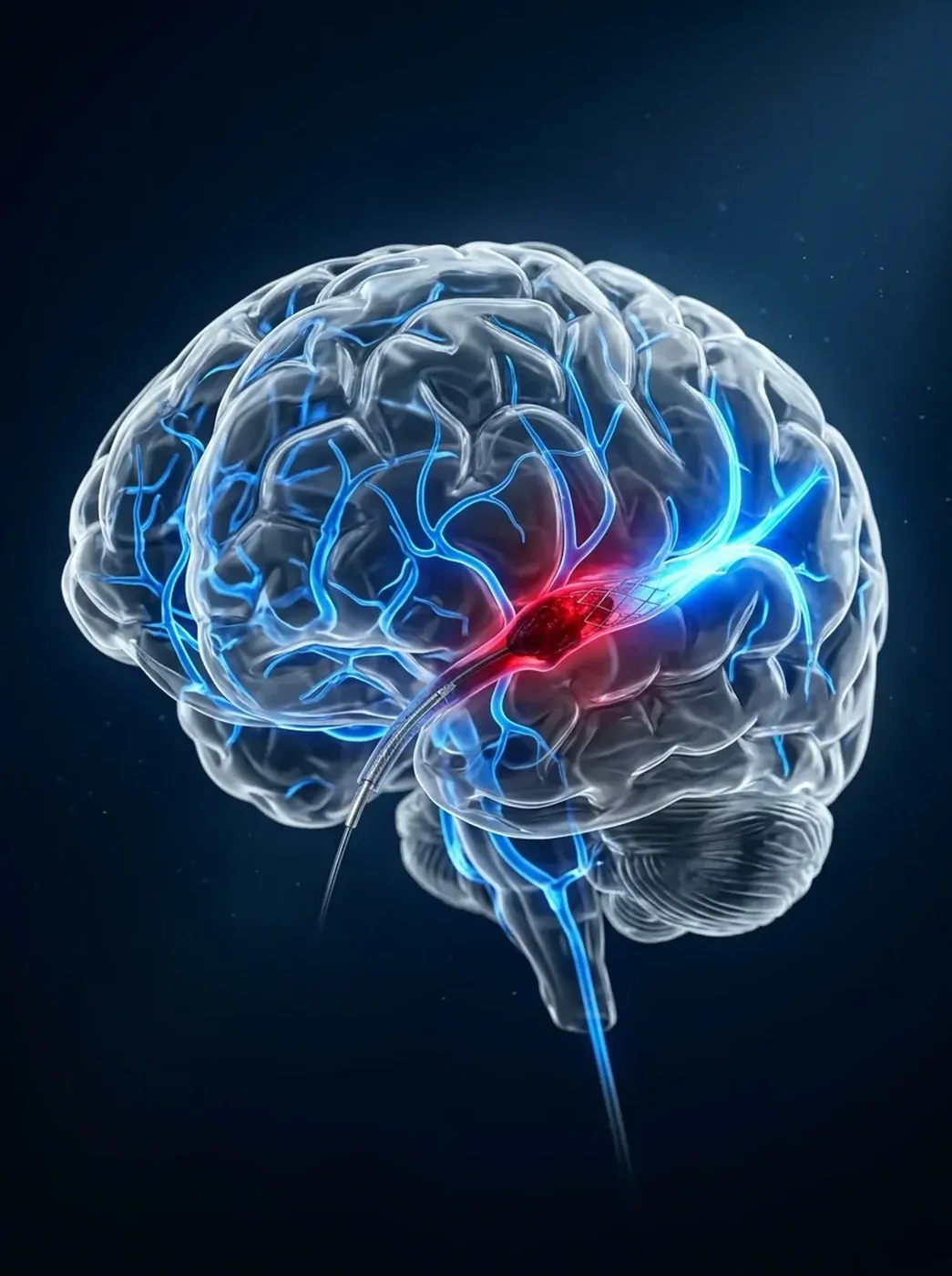
Within the right time window, removing the clot from a large brain artery can restore blood flow.
Less invasive than craniotomy
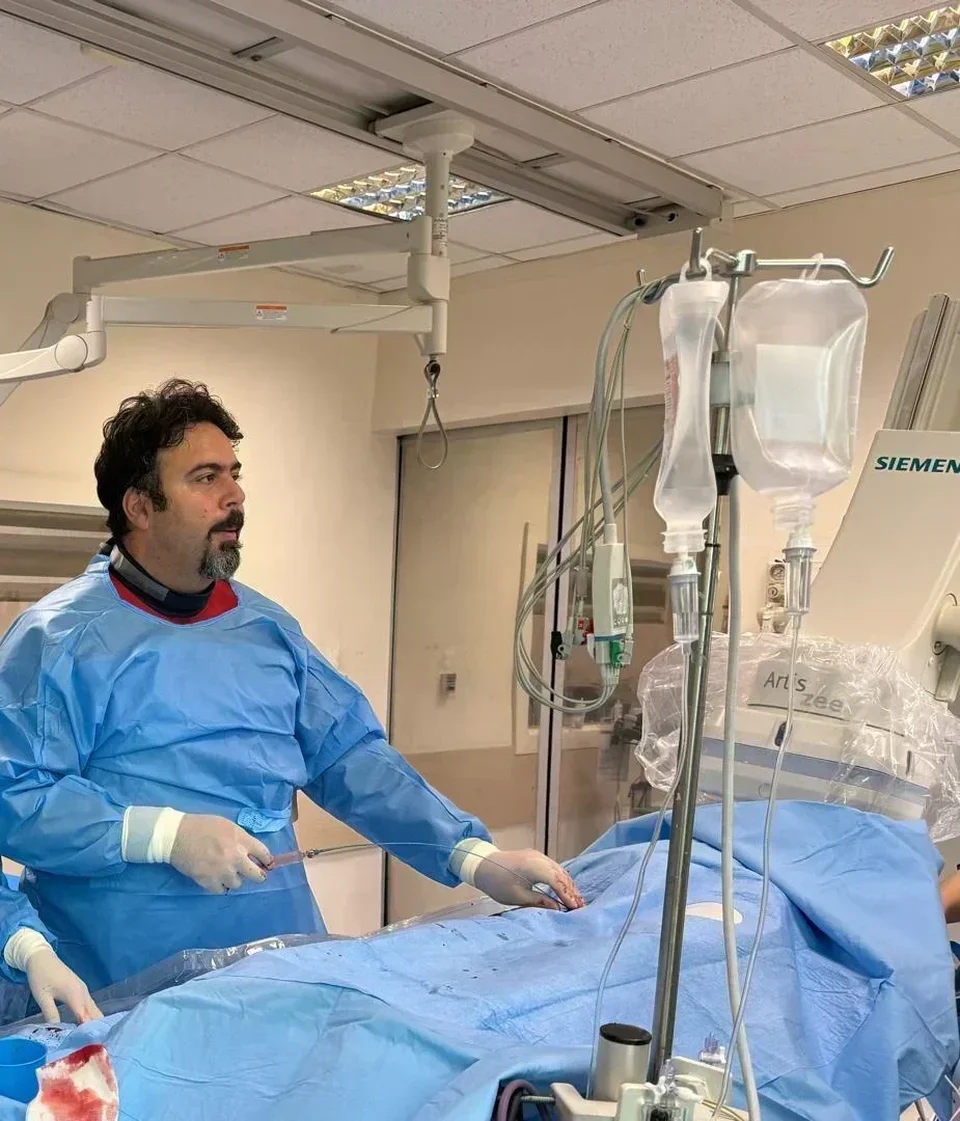
Access through an artery in the groin with a thin catheter; the skull is not opened in mechanical thrombectomy.
A multidisciplinary team
Success depends on time to treatment, imaging and coordination between neurology and interventional radiology.
Procedure steps
-
1
Urgent diagnosis
In the emergency department, CT/MRI and a neurological assessment show whether a large vessel occlusion (LVO) is present.
-
2
Mechanical thrombectomy
If confirmed, a thin catheter is guided to the brain arteries and the clot is removed with a dedicated device.
-
3
Intensive care and rehabilitation
Neurological monitoring, blood pressure control and early rehabilitation are part of the plan.
Stroke is a medical emergency. If you notice sudden one-sided weakness, difficulty speaking, loss of vision or balance, call the emergency number immediately (115 in Iran). Interventional treatment is performed for some ischaemic strokes caused by a large vessel occlusion, within a limited time window.
What is interventional stroke treatment?
In ischaemic stroke, a clot blocks a brain artery. Intravenous tPA, a clot-dissolving drug, is given in the first hours. Mechanical thrombectomy removes the clot directly from a large artery (such as the middle cerebral artery) with a thin catheter. Both require rapid diagnosis with CT/MRI and assessment by a stroke team.
Which patients is it considered for?
- Large vessel occlusion (LVO) on imaging
- Measurable neurological symptoms with a known time of onset
- No contraindication to the intervention or to tPA
- Access to an equipped centre within the permitted time window
Stroke caused by bleeding in the brain follows a different treatment path.
Benefits and realities
Thrombectomy can increase the chance of restoring blood flow and neurological recovery, but outcomes differ between patients and complications are possible. Time to reach the emergency department is the most important factor.
Note: acute stroke treatment takes place in equipped hospitals with a stroke team; the Pasdaran clinic offers non-emergency consultation and follow-up.
Frequently asked questions
What is interventional stroke treatment?
How much time is there for treatment?
Are all strokes treated with an intervention?
What are the risks of the procedure?
What happens after the procedure?
This page is for general education. The right treatment is chosen only after an examination and a review of your images and medical records.