Why this approach?
No neck scar
Unlike thyroidectomy, no incision is made on the neck; access is through an artery.
Targeting a specific nodule
Angiography identifies the arteries feeding the nodule, which are then embolized.
Short stay
Many patients are discharged shortly after the procedure and recover at home.
Procedure steps
-
1
Initial assessment
Ultrasound, thyroid tests and, if needed, fine-needle aspiration (FNA) confirm the nodule is a suitable candidate.
-
2
Embolization
Under image guidance, particles are delivered through the thyroid artery into the nodule's vessels.
-
3
Volume follow-up
Ultrasound at set intervals assesses the reduction in nodule size and pressure symptoms.
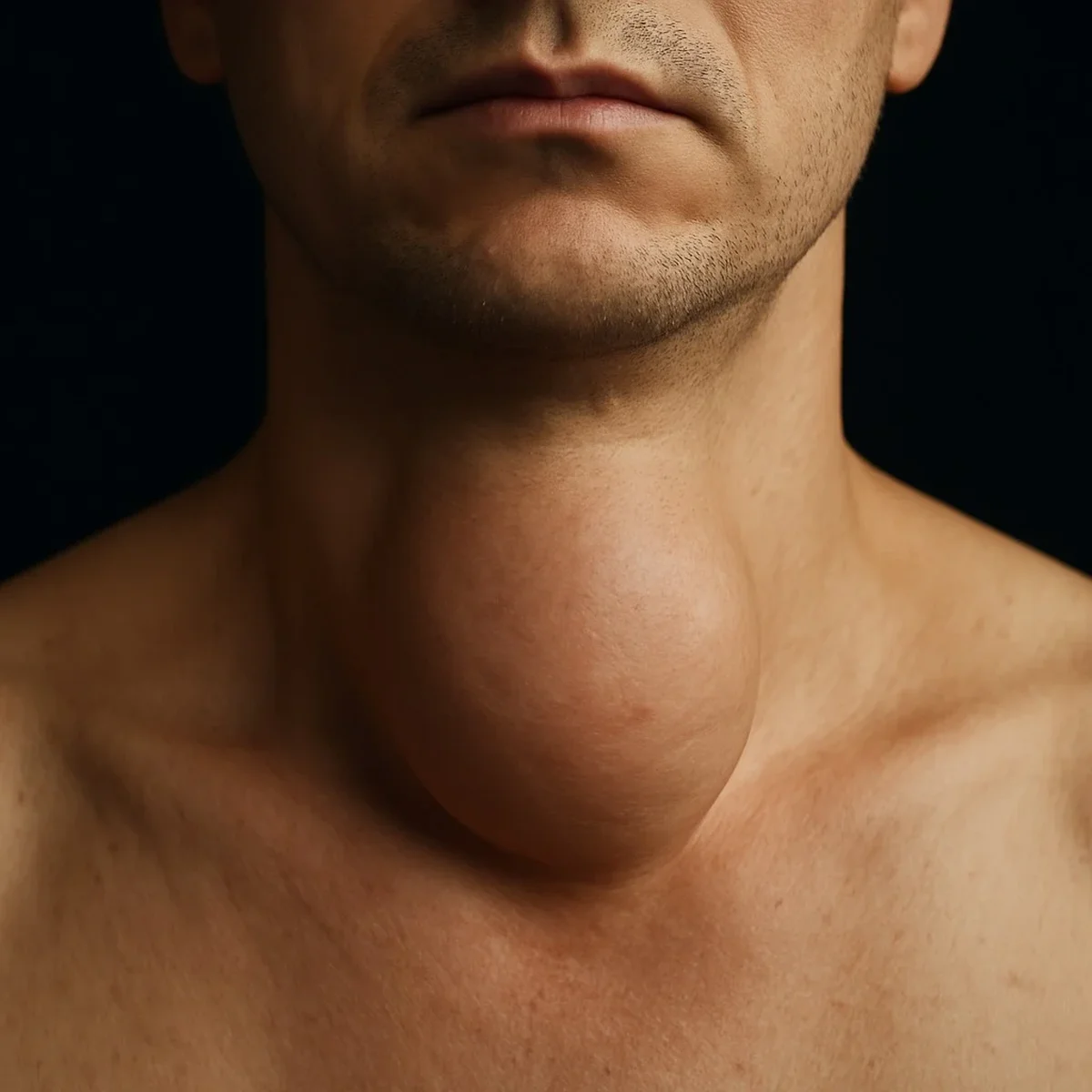
A large thyroid nodule can cause a feeling of pressure in the throat, difficulty swallowing or cosmetic concern. Traditional surgery is effective, but the scar and recovery period are not acceptable to everyone. Thyroid artery embolization is a minimally invasive method that has been proposed in recent years for some large benign nodules.
What is thyroid artery embolization?
A thin catheter is guided into the thyroid artery and the small vessels feeding the nodule are blocked with tiny particles. As its blood supply falls, the nodule gradually shrinks. The whole procedure is performed under live imaging (angiography) so that only the target vessels are treated.
Who is it suitable for?
- Large benign nodules causing pressure symptoms or cosmetic concern
- Patients for whom surgery is high-risk or who prefer to avoid it
- Nodules confirmed benign by fine-needle aspiration
Suspicious nodules, confirmed thyroid cancer or some autoimmune thyroid conditions may not be suitable.
Benefits
No neck incision, a shorter recovery than open surgery and the possibility of repeating the procedure if needed. Results vary, and complete shrinkage is not guaranteed.
Frequently asked questions
Which nodules is goitre embolization used for?
How is it different from radiofrequency ablation (RFA) or surgery?
Will my thyroid function be affected?
How long until the nodule shrinks?
Is pain after the procedure normal?
This page is for general education. The right treatment is chosen only after an examination and a review of your images and medical records.