Why this approach?
Preserving the uterus
For women who wish to keep the uterus, UAE is an alternative to hysterectomy in selected cases.
Reduced heavy bleeding
Blocking the arteries feeding the fibroid or uterine tissue reduces blood flow.
Shorter recovery
Compared with open surgery: a short stay and discharge with pain relief.
Procedure steps
-
1
Gynaecological assessment
Uterine ultrasound or MRI, blood tests and investigation of the cause of bleeding (fibroids, adenomyosis, etc.).
-
2
UAE
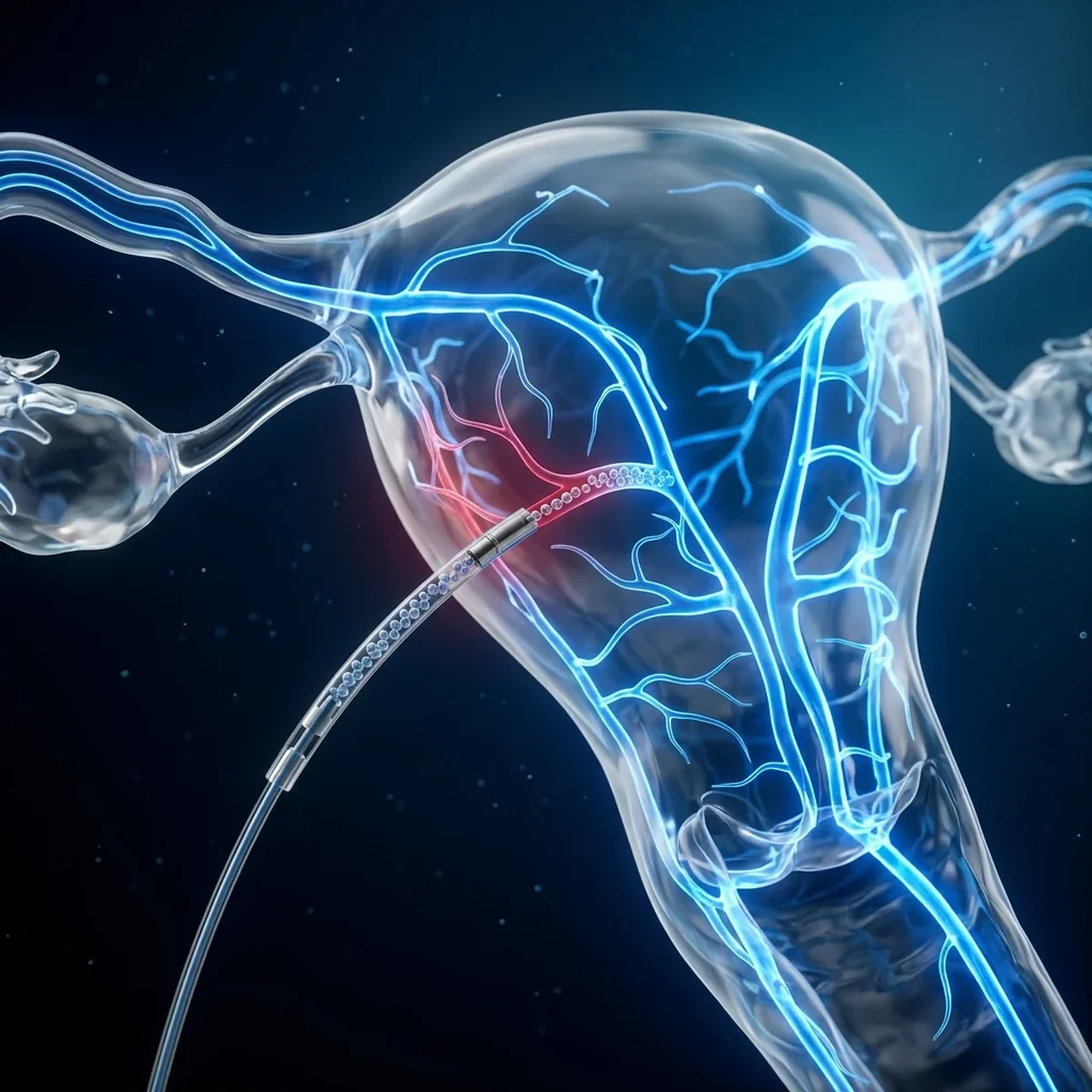
Through an artery in the groin, particles are injected into the uterine arteries to block the target vessels.
-
3
Follow-up
Management of pain and post-embolization syndrome, and ultrasound to assess the fibroids.
Heavy uterine bleeding (menorrhagia) can disrupt daily life; it may be caused by fibroids, adenomyosis or other conditions. Hysterectomy is a definitive solution, but for women who want to preserve the uterus, uterine artery embolization (UAE) is a minimally invasive option.
What is UAE?
A thin catheter is guided through the arteries to the uterine arteries, and tiny particles cut off the blood supply to the fibroid or hypervascular tissue. The fibroid shrinks and bleeding decreases.
Who is it for?
- Uterine fibroids with heavy bleeding
- Adenomyosis not responding to medication
- A wish to preserve the uterus
- Women who are not candidates for surgery or myomectomy
Benefits
No abdominal incision, preservation of the uterus and symptom improvement in most patients. Possible side effects include post-embolization syndrome, early menopause and, rarely, the need for hysterectomy.
Reminder: severe bleeding or sudden weakness is an emergency. UAE is recommended only after gynaecological assessment and imaging.
Frequently asked questions
What kinds of bleeding is UAE used for?
Does UAE affect fertility?
What is post-embolization syndrome?
Is UAE an alternative to hysterectomy?
How long until bleeding improves?
This page is for general education. The right treatment is chosen only after an examination and a review of your images and medical records.