Why this approach?
No large incision
Access through tiny skin punctures; minimal scarring and a shorter recovery than classic vein stripping.
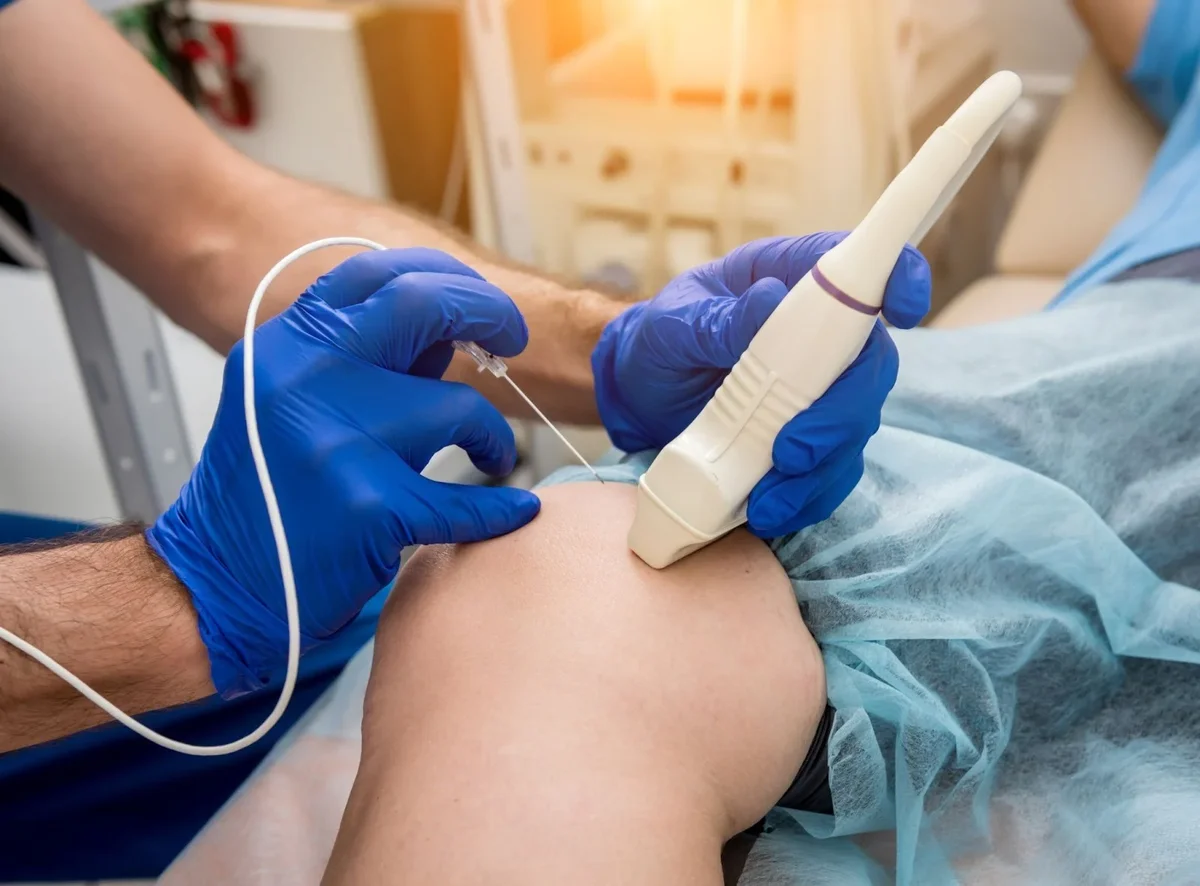
Ultrasound guidance
The faulty vein is seen in real time, so treatment is precisely targeted.
Faster return to work
Many patients resume light activity the same or the next day; individual instructions matter.
Procedure steps
-
1
Venous ultrasound
A Doppler ultrasound maps the superficial and deep veins and the valve junctions (SFJ/SPJ).
-
2
Minimally invasive treatment
Laser (EVLT) or radiofrequency energy inside the faulty vein; sometimes sclerotherapy or removal of side branches.
-
3
Stockings and follow-up
Compression stockings, light walking and a follow-up ultrasound to confirm the vein is closed.
Leg varicose veins are not just a cosmetic problem: they can cause pain, heaviness, itching or swelling. For years, surgical stripping was the standard; today, minimally invasive, ultrasound-guided methods such as endovenous laser (EVLT) and radiofrequency ablation play a major role.
What is minimally invasive varicose vein treatment?
After a Doppler ultrasound shows the faulty vein and valve, a laser fibre or radiofrequency catheter is passed into the vein through a tiny skin puncture. Heat seals the vein from the inside and blood is rerouted through healthy veins. Smaller veins may be treated additionally with sclerotherapy or local removal.
Who is it suitable for?
- Symptomatic great or small saphenous vein varicosities (pain, swelling, tired legs)
- Mild to moderate skin changes caused by venous insufficiency
- People who prefer to avoid open surgery with long incisions
- Patients whose anatomy is suitable for EVLT/RFA on ultrasound
Some situations, such as active thrombosis, infection or severe arterial disease, require a different approach.
Benefits
Less scarring, usually no need for general anaesthesia and a quicker return to activity are common advantages. Expectations should be realistic: symptom relief is the main goal, and the cosmetic result differs from person to person.
Reminder: sudden swelling of one leg, severe pain or spreading redness requires urgent medical attention (possible thrombosis).
Frequently asked questions
What is the best treatment for varicose veins?
Is varicose vein treatment painful?
What should I do after treatment?
Can varicose veins come back?
How does laser differ from classic surgery?
This page is for general education. The right treatment is chosen only after an examination and a review of your images and medical records.